
There are three ways to get into Google’s AI answers. Below, we walk through them using Luxeo cases and show where we placed content, what Google pulled into its answer, and what we saw in the tracker afterwards.
In essence, it comes down to two options: add your brand to a page Google already cites, or publish a new page and try to get it into the sources. The new page can live on a third-party site or on your own, hence three ways.
This approach works when Google already references third-party reviews and rankings for your target query, and their editors are open to placements.
Say you have 50 sites and a budget for three placements. How do you choose? We enter the query we want to appear for, collect the links from the AI Overview and see which part of each page Google pulls into the answer. If the data comes from a table, we negotiate a spot in that table with the editors. After the edit, we run the same query again and check whether the brand now appears in the answer.
There is a catch: everything may look fine in the tracker while the real SERP is already different. In a Nozzle example for “white label local seo”, one SERP snapshot showed SEO agencies and the other a steakhouse. Who saw which version and why is anyone’s guess from these frames. It may be linked to Google’s conflict with SERP scrapers: in July 2026, a court dismissed Google’s complaint against SerpApi and allowed it to amend some of its claims. For now, this is a hypothesis.[1]
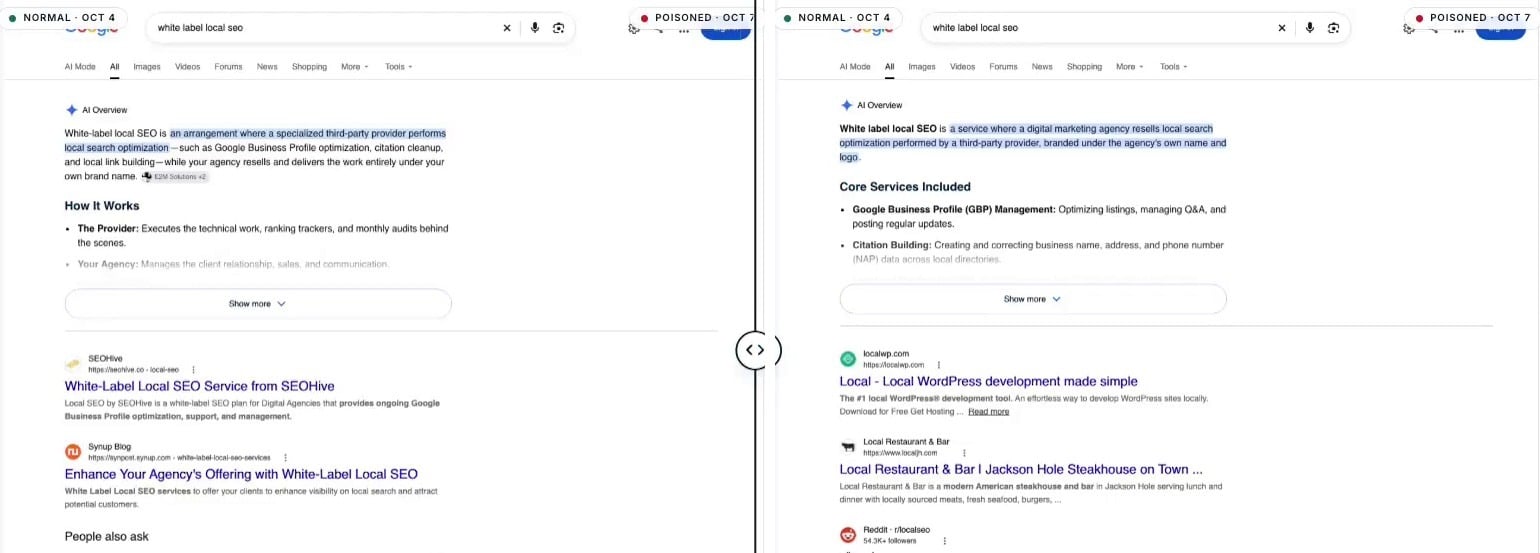
Two frames from the Nozzle video. One query, two versions of the SERP.
Watch the video switching between the two SERPs
Ahrefs, SE Ranking and other trackers help build the shortlist. Before paying, we still go to Google and check manually. We open a clean profile and set the language and region. If needed, we use a proxy from the target country and check the location shown at the bottom of the SERP. We record the query, date, country, language and URL. Some time later, we check again to see whether the source holds its place in the answer.[2]
This approach works when Google readily cites media and review sites for the query, but there is no existing page where you could add your brand. The case is from the online casino niche, Spanish market. For the Spanish query “chicken road”, we published an article in the Spanish outlet Nueva Tribuna.
For this query in Spain, Google surfaced both the slot and mobile games. In the paragraph about the slot, it cited our article in Nueva Tribuna. The article also appeared on the right, in the source cards. The card said the piece was four hours old.[3]
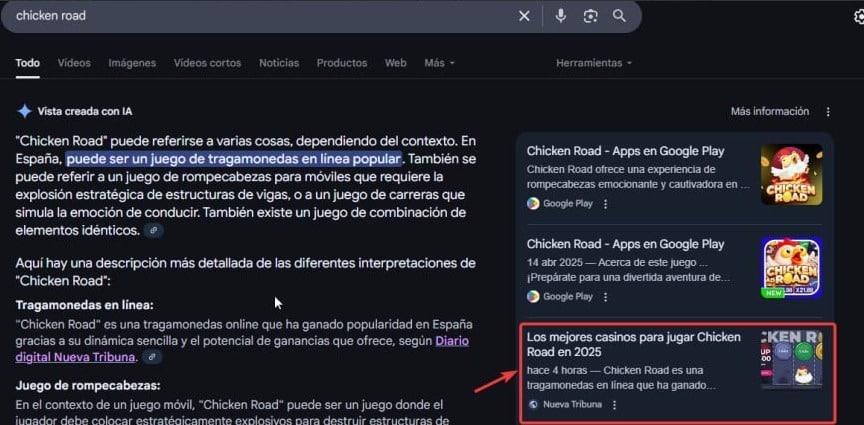
Chicken Road in Spain. Nueva Tribuna is visible in the AI Overview text and in the card on the right.
Over the article’s lifetime, the placement brought 134 deposits from AI Overviews and regular organic search combined. In Keitaro, the article runs as four campaigns: 92, 30, 8 and 4 deposits. Our traffic for crash games was weaker in quality than for general casino keywords, so we also look at how players behave after depositing.

Keitaro. 134 deposits over the lifetime of the Nueva Tribuna article. Deposits are in the Sales column.
Later, the article was noticed on Telegram: the SEO for DEP$ / iGaming channel featured it in its SERP breakdown.
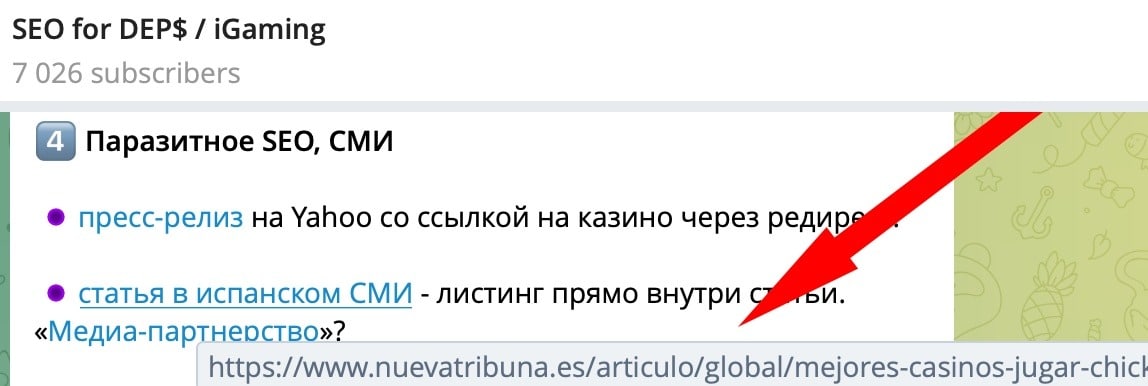
Breakdown by the SEO for DEP$ / iGaming channel. 7,026 subscribers at the time of the screenshot.
We look at which sites Google has cited in recent weeks for similar queries. A big media name means little on its own. What matters more is that the article answers what people are looking for with that query: for “chicken road”, that is a review of the game and the casinos where you can play it, not gambling news in general.
Beyond the site’s trust in the target GEO, we check how similar articles rank on it and whether it already has content on our topic. On Nueva Tribuna, casino publications held decent positions, and we were the first to publish. Competitors later released articles on the same topic, but ours, as the first one with authority already built up, outranked even newer ones. We also boosted it with quality links, which gave it an edge both within the site and over competitors on other sites.
Each country and language has its own SERP, so we check every “country + language” pair separately. Belgium in French and Dutch, Switzerland in German, French and Italian, if all three audiences are in the plan.
This approach works when nobody really answers the question in the SERP. Then you can publish your own page. For an informational query, it could be a comparison or a breakdown of terms. In a cross-brand project, we start with demand for a specific brand and look at how people search for it in each country and what they want to know.
As an experiment, we launched a separate site targeting branded demand for SpinSahara. Visually, it resembled the brand’s website. In Spain and Portugal, playspinsahara.com appeared in AI Mode’s quick results. The screenshots show the site card. Whether Google cites the page in the answer text itself, we check separately by opening the sources for a specific paragraph.
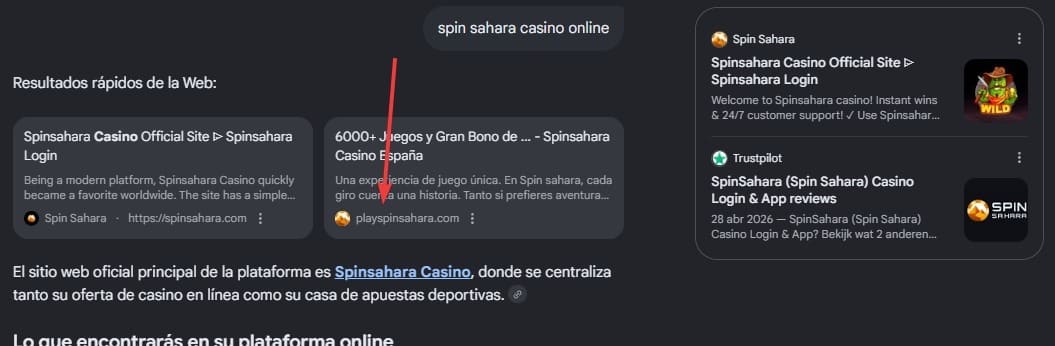
Spain, query “spin sahara casino online”. The site card is to the left of the sources block.
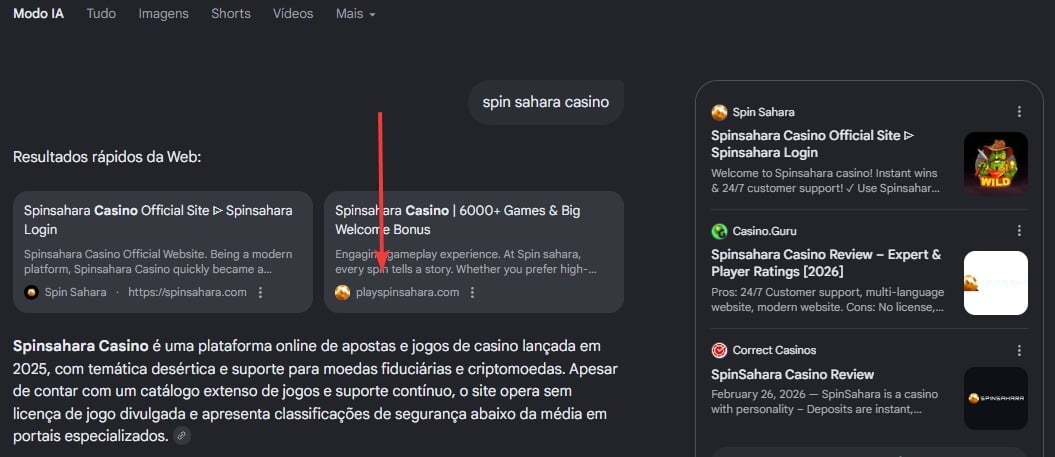
Portugal, query “spin sahara casino”. The domain is in the quick results again. The cards on the right are different.
So for the next launches, we collect local phrasings in advance and check each query in the right country and language. On the page itself, we give an answer for that market and clearly state who published the content.
When we collect branded queries for a site network, we also export misspellings, because some of them have their own demand. In Polish AI Mode, for the query “glorian casino”, Google understood it meant Glorion and cited our site glorionplay.pl right in the first paragraph of the answer. You can see this by opening the links directly from the text.
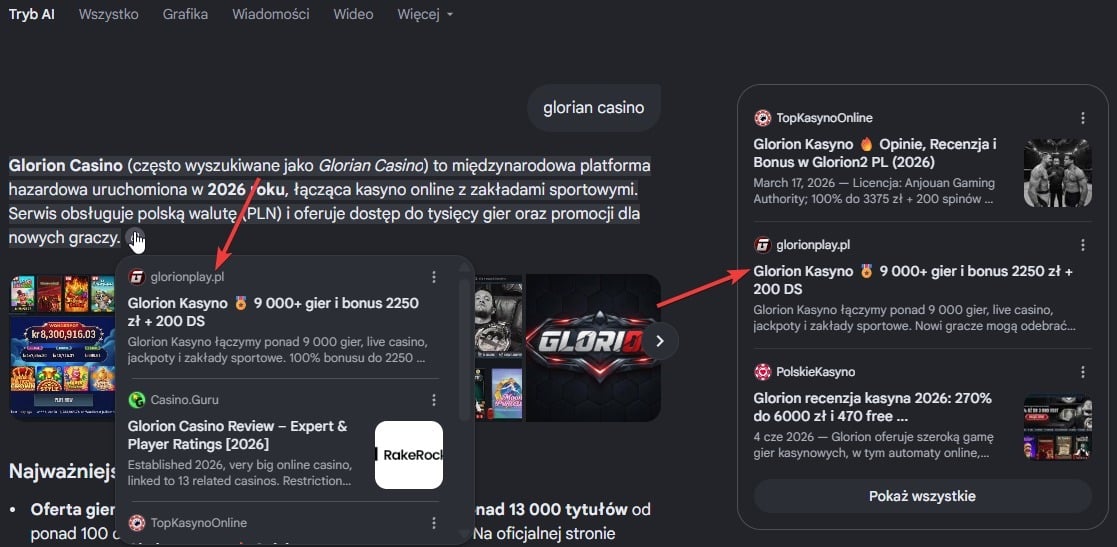
Polish AI Mode. Google recognized Glorion from the query “glorian casino” and showed the domain in the sources.
According to the chart, the first impressions came in late October 2026. At the time of export, Search Console showed 40 impressions, 38 of them in Poland. The first screenshot shows exactly where Google cited us. The second shows the breakdown by country.
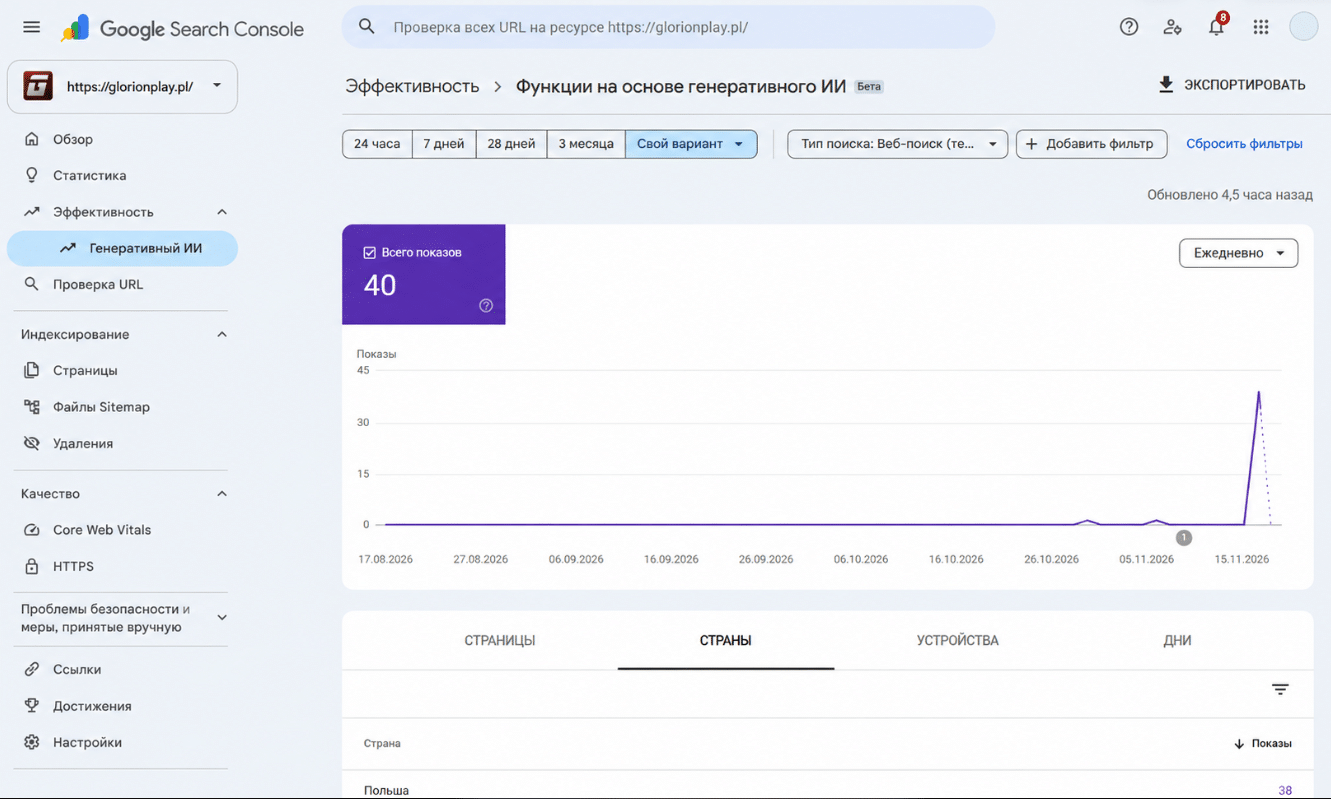
Glorion in Search Console. 40 impressions in total, 38 of them in Poland.
The new site bonuskongs.es got its first impressions in AI features in late October 2026. The screenshot shows 23 impressions, 21 of them on the homepage. This is an early signal. The Search Console report counts AI Overviews and AI Mode together, so we check the specific query and the link’s position in the answer separately.[4]
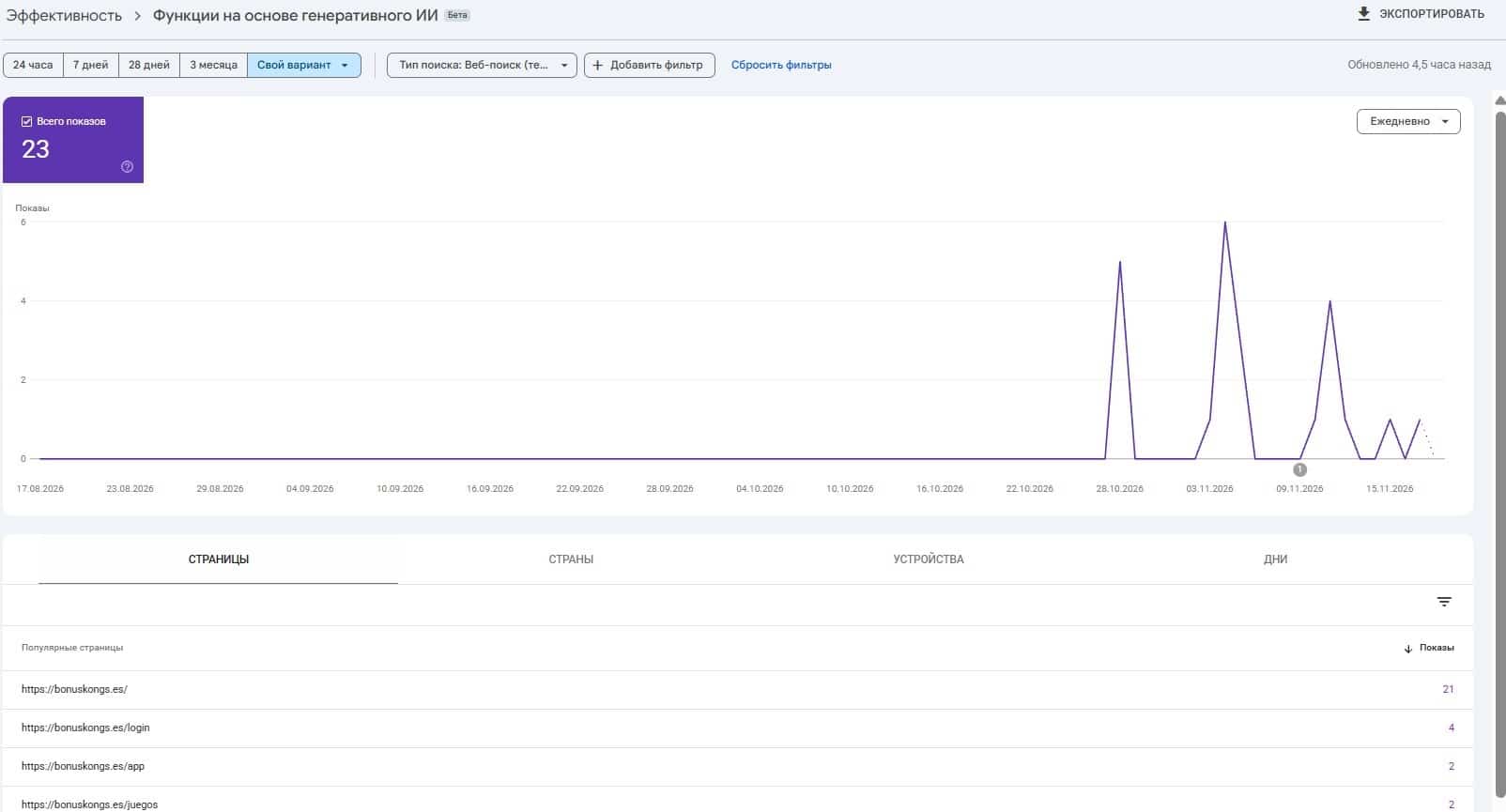
Bonus Kong, 23 impressions. The breakdown shows the homepage, /login, /app and /juegos.
On another project, Search Console showed 99.5K impressions in Google’s AI features over three months. At the start of the period, there were mostly 800–1,200 impressions a day; by the end of the chart, almost 2,400. To understand what drove the growth, we open the breakdown by page and country and check the SERP for the main queries of those URLs.
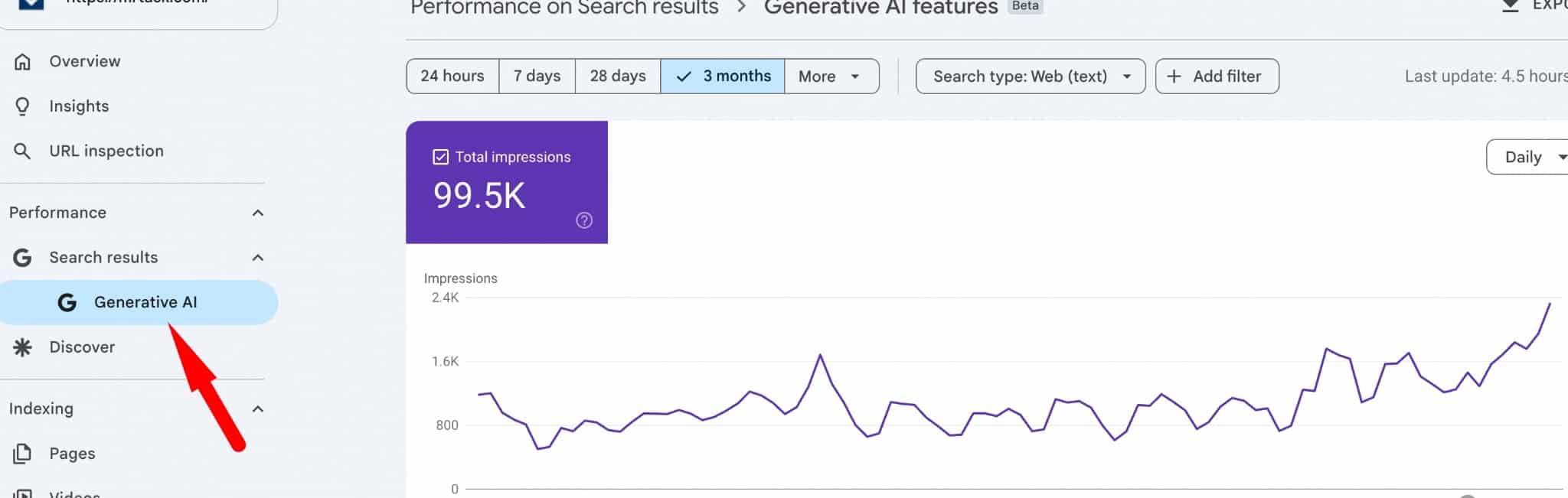
Daily impressions in Search Console.
For now, impressions are the only metric reported separately for AI search. In Search Console, we see impressions in AI features, can calculate their share of all Google impressions for the same period and compare the trend with organic traffic. On the product side, visits from AI Overviews and regular search arrive together. So it is currently technically impossible to count visits and deposits from AI answers separately.
Queries about whether a brand can be trusted are a separate story. For “is 1xbet legit”, Google first talked about the license, country restrictions and player complaints. Next to it were links to the company’s rules, Trustpilot and Wikipedia. An answer like this shows which facts Google relies on when assessing trust in a brand.
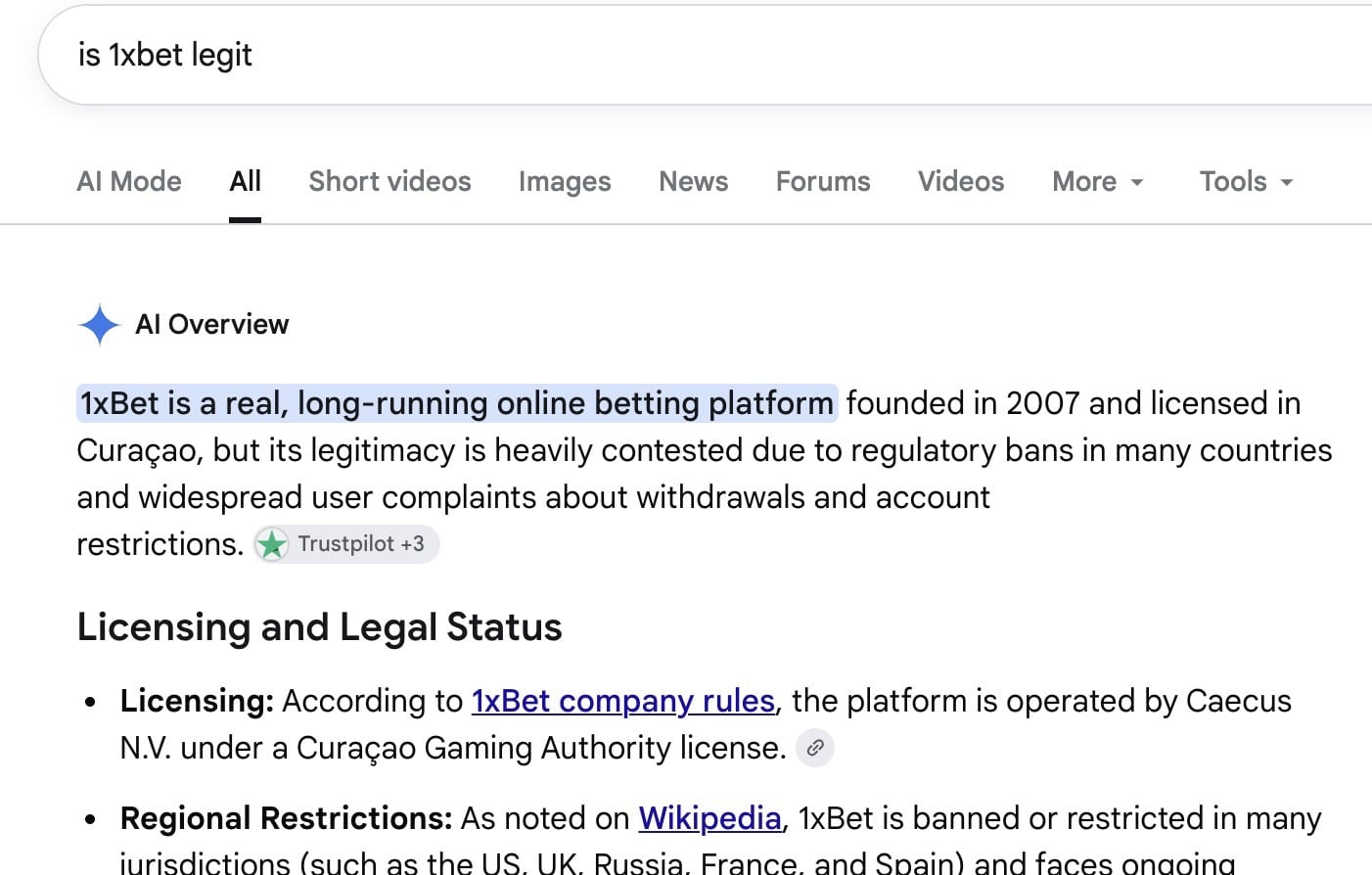
AI Overview for “is 1xbet legit”. The block on licensing and restrictions comes right after the first paragraph.
For such queries, we start with the local regulator’s register, where we check the operator and the domain, and then compare it with what Google says. If there is no local license, that fact may become the main point of the answer. A new article can add context, but the status is still determined by the regulator.
Whichever approach you choose, we record every test the same way: the query, a screenshot, the link and the date of publication or edit. Then we check again and see what changed in the answer. We cross-check impressions in Search Console and deposits in the tracker.
Finally, SEO should not be neglected. We compared the organic SERP with AI answers for the same queries, and Google took its sources from organic results. Apparently, though, with a delay: new sites that have recently reached the top don’t make it into AI answers right away. That is why strong organic positions remain the foundation for getting into AI Overviews.

CONTACTS
Promotion application: order@luxeo.team
For partnership: partner@luxeo.com.ua

Thanks for your application!
Our specialists will contact you within 24 hours
